Uncategorized

A detailed view of a worn car transmission assembly, showing intricate gears and bearings, resting on a metal cart in a workshop setting

7 Transmission Warning Signs That Mean You Should Book It In Now

Gearboxes don’t fail without warning. They give you weeks of signals first, and almost every driver who ends up with a monster repair bill can point back to a noise, a smell or a delay that they decided to live with. The list below is the same seven things we ask about when someone phones our workshop in Okavango Park. If you can tick any two of them, the vehicle doesn’t need another month of monitoring. It needs to be on a lift. The seven warning signs 1. The revs climb but the speed doesn’t You press the accelerator and the engine note rises, but the car doesn’t pull the way it should. It’s most obvious joining the N1 or climbing out of Bakoven, when the gearbox is under load. On a manual, the same symptom shows up as the clutch slipping before it bites. This is the single clearest sign that something inside the box has stopped holding. It gets worse quickly, and every slip event generates heat that damages the fluid and the friction surfaces around it. This one doesn’t improve on its own. 2. A hard thump or lurch when it engages gear You select drive or reverse and the whole car jerks. Or you feel a solid clunk as it shifts between gears. A thump is often a pressure or control problem rather than a worn mechanical part, which can be cheaper to fix than the noise suggests. But a thump under load can also mean worn mounts, or backlash in the drivetrain, so it needs to be diagnosed rather than guessed at. 3. A delay before the car moves You move the selector, and nothing happens for a second or two before it finally engages. Delayed engagement usually points at low fluid pressure or a fluid level that’s fallen, which in turn points at a leak or a worn seal. This is one of the more encouraging signs on the list, because catching it early often means a fluid service and a seal rather than a strip-down. Let it run for another few thousand kilometres and the delay turns into a slip. 4. A burning smell you can’t account for Manual gearboxes and automatics both give off a sharp, acrid smell when they overheat. On an automatic, burnt fluid smells like scorched oil with a chemical edge to it. You’ll notice it after a hard drive, a long climb, or a towing trip. Burnt fluid has lost the properties that protect the gearbox. It runs thinner, it lubricates worse, and it carries the debris that the overheating produced. Once you can smell it, the fluid is already past its useful life even if nothing has failed yet. Check the fluid, find out why it got hot, and get the level and condition confirmed. 5. Whining, humming or grinding that follows road speed A noise that gets higher in pitch as you go faster, stays the same in every gear, and changes when you lift off is usually coming from the gearbox, the differential or the propshaft rather than the engine. Grinding when you engage a gear on a manual points at worn synchronisers or a clutch that isn’t releasing properly. The noise itself isn’t the emergency. The metal that’s making it is, because those particles circulate through the oil and reach parts that were still fine. Diagnosing a whine costs far less than rebuilding a gearbox that has ground itself apart internally. 6. Fluid on the driveway under the middle of the car Red or reddish-brown fluid leaking from under the middle of the vehicle is transmission fluid. Dark fluid leaking from the rear axle area is differential oil. Either way, you’re losing pressure and lubrication, and the leak won’t stop by itself. A slow leak is easy to miss because you top it up and the car feels fine for a while. That’s exactly how a gearbox ends up running low enough to damage itself. Small leaks are cheap to fix. Low fluid is not. 7. The warning light, limp mode, or a gear that’s simply gone The transmission warning light means the control module has logged a fault. Limp mode means it has decided it can’t control the gearbox safely, so it locks you into one gear to protect the internals. A gear that no longer engages at all means something has already failed. These are the loud signals. Nothing on this page is more urgent than a flashing warning light and a car stuck in limp mode. Continuing to drive in limp mode adds heat and wear to a gearbox that is already telling you it’s in trouble. How urgent is each one Not every sign is a stop-the-car emergency. Here’s how to read them. Warning sign Urgency What it usually points at What it typically means Revs climb without speed following Book immediately Internal slip, low pressure, worn clutch packs Damage grows with every drive Hard thump or lurch into gear Book this week Solenoid, pressure control, mounts or backlash Often repairable before internal damage Delay before the car moves Book this week Low fluid, leaking seal, filter restriction Catch it now and it stays a small job Burning smell after a drive Book immediately Overheating, burnt fluid, slipping friction surfaces Fluid needs changing and the cause needs finding Whine or grinding with road speed Book this week Bearings in the box or diff, propshaft, synchronisers Cheap now, expensive once metal circulates Fluid leaking underneath Book this week Seal or gasket failure, low fluid level Small repair now, or a dry gearbox later Warning light, limp mode, lost gear Stop driving and call Control fault, solenoid failure, internal failure Already a fault. Further driving only adds damage If you can tick more than one Two symptoms usually mean one cause. A leak low enough to drop the fluid level produces delayed engagement, then a slip, then a burning smell, in that order, and it’s all the same fault underneath. When

7 Transmission Warning Signs That Mean You Should Book It In Now Read More »
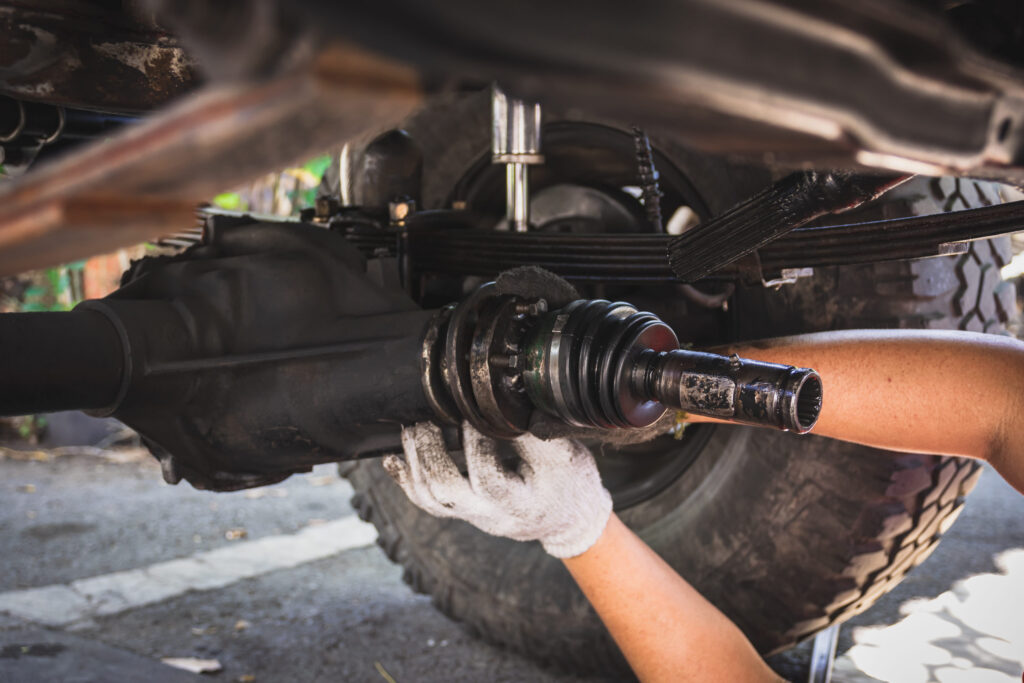
Technician's hand is wearing white cloth gloves, fixing the propulsion shaft of the car.

Differential and Propshaft Problems: The Symptoms Most Drivers Miss

A differential rarely fails without warning. It complains for weeks, sometimes months, before anything breaks. The trouble is that the complaints sound like something else. A whine at 80 km/h gets blamed on tyres. A clunk on pull-away gets blamed on the suspension. A vibration at highway speed gets blamed on wheel balancing. By the time the noise is loud enough to ignore, the damage inside the diff has usually moved past a bearing and into the crown wheel and pinion. That’s the difference between a repair and a rebuild. We diagnose and recondition differentials, propshafts and CV joints at our workshop in Okavango Park, Brackenfell. Here’s what to listen for, and how to tell a drivetrain fault from the things drivers usually blame first. The differential, in one paragraph The differential sits between the two driven wheels and lets them turn at different speeds while the car goes around a corner. Inside it there’s a crown wheel and pinion, a set of spider gears, bearings and seals, all running in oil. The propshaft carries drive from the gearbox to the diff, with universal joints at each end and often a centre bearing along the way. On front-wheel-drive and independent-suspension cars, CV joints do the same job as universal joints while also allowing the wheels to steer and move up and down. Every one of those parts wears. How you catch the wear determines what it costs. Differential symptoms you shouldn’t ignore A whine or howl that follows road speed. This is the classic differential complaint. The noise appears at a certain speed, stays at the same pitch in every gear, and changes when you lift off or accelerate. That last detail is the giveaway. Diff whine usually changes under load, getting louder when you accelerate and quieter when you coast. Tyre noise doesn’t care whether you’re on the power. A clunk when you take up drive. Select reverse after being parked, or let the clutch out in first, and you hear a single solid thud from underneath. That’s excessive backlash, usually from worn gears or a worn pinion bearing. It’s also a common propshaft universal joint symptom, so the two get checked together. A rumble that gets worse with speed. A failing diff bearing produces a deep rumble that rises steadily with road speed and doesn’t change when you change gear. Left alone, a collapsing bearing destroys the crown wheel and pinion as the pinion moves out of mesh. Oil weeping onto the diff housing or the driveway. A failing pinion or output shaft seal lets oil out and water and grit in. The oil level drops quietly, and the top of the diff runs dry before anything sounds unusual. One wheel spinning while the other does nothing. On a vehicle with an open diff that’s normal. On a limited-slip or locking diff, it means the friction plates or the locking mechanism have worn out. Shuddering or binding when turning at low speed. Typically a limited-slip diff with the wrong oil or worn clutch plates, and often worse when the diff is cold. Going around a tight corner in a parking lot feels like the back end is dragging. Propshaft and CV joint symptoms Vibration through the seat, floor or gear lever at a specific speed. Propshaft vibration usually appears in a narrow band, often around 80 to 100 km/h, and then seems to smooth out as you go faster. It’s often worse under acceleration than coasting. This is the one drivers most often mistake for wheel balancing, and the two genuinely sound alike. A balancing problem usually shows in the steering wheel, a propshaft problem usually shows through the floor and the seat. A rhythmic clunk or knock on pull-away. A worn universal joint develops play before it fails. You hear a knock as the slack is taken up, then it goes quiet once the drivetrain is loaded. Clicking while turning. The signature of a worn outer CV joint. It clicks or taps on full lock, and it’s loudest when you turn while accelerating. Every front-wheel-drive car with significant mileage will do this eventually. Catching it at the click stage means replacing a joint. Ignoring it means the joint can let go, and a separated CV joint leaves you stranded. A torn CV boot and grease thrown around the inner wheel arch. The boot is what keeps the grease in and the grit out. Once it splits, the joint wears quickly and the failure arrives early. Boots are cheap. Joints are not. A shudder when accelerating from low speed. On a vehicle with a two-piece propshaft, a worn centre bearing or a collapsed support rubber produces a shudder you feel through the whole car right as load comes on. The symptoms that get blamed for something else This is where the cost creeps up. Three faults get misdiagnosed constantly. Tyres. Worn or unevenly worn tyres produce a howl that sounds like diff whine. The difference is that tyre noise starts lower in the speed range, doesn’t change with load, and may change when you swap wheels front to back. If the noise moves when you rotate the tyres, the tyres are the noise. Wheel bearings. A failing wheel bearing rumbles like a diff bearing. The test is to load each side in turn, because a wheel bearing gets louder or quieter when you steer or change direction and take weight off it. A diff bearing doesn’t care which way you steer. Gearbox mountings and engine mountings. A collapsed mounting produces a clunk on pull-away and a vibration through the car that people attribute to the drivetrain. It’s cheaper to find, and worth ruling out before any gearbox gets stripped. Getting the diagnosis right first is what saves the money. We road test with the fault reproduced, put the vehicle on a lift and check for play and backlash at every joint, look at the oil for metal, and only then quote. That inspection forms part of our

Differential and Propshaft Problems: The Symptoms Most Drivers Miss Read More »

Truck & Commercial Vehicle Gearbox Repairs: Downtime, Cost and What to Expect

A passenger car with a noisy gearbox can wait until next month. A truck cannot. Every day it sits in the yard is a day of deliveries not made, sites not serviced, and a driver still on the payroll. That’s why commercial vehicle transmission work is a different job to a car gearbox, and why it gets quoted and scheduled differently. We repair commercial transmissions at our workshop in Okavango Park, Brackenfell, and the conversations are always the same. The owner wants to know two things. How much, and how many days. Here’s a straight answer to both, and what you can do to keep the number and the days down. Why commercial gearboxes fail differently from car gearboxes A truck gearbox does the same basic work as a car gearbox, under completely different conditions. That changes which parts fail and how quickly. Load is constant. A light commercial vehicle spends most of its life loaded to or near its rated capacity. A car gearbox sees that kind of load occasionally, on a steep hill or with a full boot. A truck sees it every shift, all day. Gears and bearings that would last the life of a car reach their wear limits far sooner. Torque is much higher. Commercial transmissions handle multiple times the torque of a passenger gearbox. Every tooth engagement, every countershaft bearing and every synchroniser takes a heavier beating. When something is marginal in the design, a loaded truck finds it. Heat builds and stays. A loaded truck works the gearbox hard for hours at a stretch. Transmission oil that stays hot for long periods oxidises, thins, and stops protecting the bearings. On commercial vehicles, the oil change interval is not a suggestion. The duty cycle is punishing. Delivery routes mean hundreds of clutch engagements and gear changes a day. Refuse and construction work means low-speed, high-load, constant direction changes. That’s the hardest duty cycle a manual gearbox can face. Mileage is high and clocked fast. A fleet vehicle can cover in three years what a private car covers in fifteen. Wear that you would expect at 300,000 km arrives in year four. The symptoms fleet owners report Commercial gearbox faults announce themselves before they strand the vehicle. Catch them at this stage and the repair is smaller. A whine or rumble that changes with road speed but not with which gear you’re in usually points at bearings in the gearbox or the differential. A whine that’s present in one gear and quiet in the next points inside the gearbox itself. Difficulty selecting a gear, or a gear that grinds when you engage it, points at worn synchronisers or a clutch that isn’t releasing fully. Both get worse, and the second one takes the gearbox with it if you keep forcing it. Jumping out of gear under load is a serious warning. It usually means worn selector forks, worn gear teeth or excessive shaft end float. It doesn’t fix itself, and it becomes a safety problem on a loaded vehicle. A burning smell or a clutch pedal that engages very high suggests the clutch is on its way out. On a truck, a slipping clutch also overheats the flywheel and the release bearing, which turns a clutch job into a clutch and flywheel job. Oil leaking from the bell housing or the rear seal points at a failed input or output shaft seal. Left alone, the oil level drops and the bearings run dry. Vibration through the cab or the gear lever at a specific speed often comes from the propshaft rather than the gearbox. Universal joints, centre bearings and balance weights all fail with age and load. Downtime is the real cost Fleet managers usually know the parts and labour number. The number that hurts is the days. Here’s how the common jobs compare on turnaround. Job Typical vehicle Workshop turnaround Typical cost range Propshaft repair and balancing Light commercial, bakkie Same day to 2 days R3,500 – R12,000 Clutch replacement Light commercial, bakkie 1 – 2 days R8,000 – R20,000 Differential rebuild Light to medium commercial 2 – 5 days R12,000 – R40,000 Manual gearbox rebuild Bakkie, panel van, delivery vehicle 3 – 7 days R15,000 – R45,000 Heavy truck gearbox rebuild Heavy commercial, truck tractor 1 – 3 weeks R45,000 – R150,000 and up Those ranges move with the make, the parts availability and how much damage was done before the vehicle came in. A heavy truck unit with parts out of Europe takes longer than a common local box, and that delay sits in the availability line rather than the labour. Put a daily figure on your own downtime and the table reads differently. A truck earning R6,000 a day that sits for a week has cost R42,000 before the workshop invoice arrives. That’s usually more than the repair itself, and it’s the argument for fixing early rather than running a failing gearbox until it stops. How to keep downtime to a minimum Book the inspection before the failure. A gearbox with a developing bearing whine can be scheduled into a quiet week. A gearbox that has seized gets recovered, and then it waits its turn in the queue like everything else. Tell us the symptoms in detail. Which gear, which load, which speed, hot or cold, and whether it’s worse going uphill. That narrows the diagnosis before the vehicle arrives, and it means we order the right parts on day one instead of day three. Give the vehicle’s history. Service intervals, last oil change, previous repairs, and whether the box has been opened before. A gearbox that’s been worked on elsewhere often has a surprise inside, and it’s better to know that upfront. Consider a service exchange or rebuild rather than trying to source a used unit. Chasing a used gearbox for a specific truck model can take longer than rebuilding the one you have, and it lands you with an unknown unit at the end of it. On commercial

Truck & Commercial Vehicle Gearbox Repairs: Downtime, Cost and What to Expect Read More »

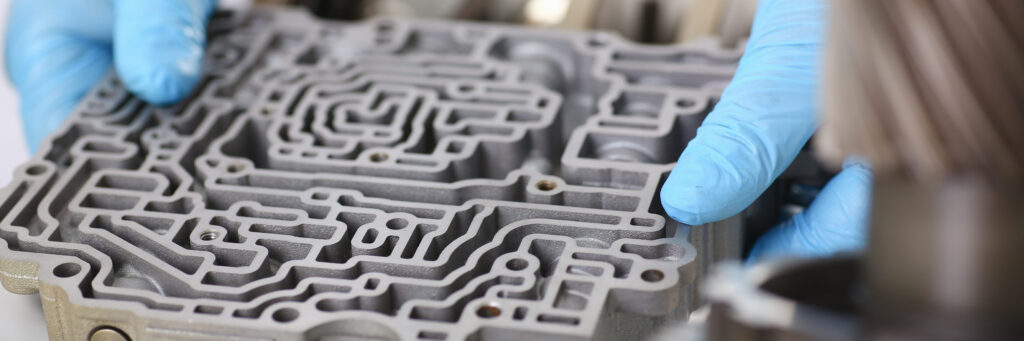
A close up shot of an automatic gearbox held by a set of blue gloved hands

Gearbox Rebuild vs Replacement: How to Decide, and What Each Costs

The workshop has phoned you with the number, and it’s bigger than you hoped. Now you’re weighing three options: rebuild the gearbox you have, buy a factory-new replacement, or fit a used unit from a scrapyard or importer. Nobody enjoys this decision, and the workshops that dodge the number are the ones that lose customers. So here’s the honest version of how the three options compare, what drives the price, and how to choose without regretting it in eighteen months. One thing to settle first. A rebuild is not a repair. A repair fixes one fault inside a gearbox that is otherwise healthy. A rebuild strips the box to a bare casing and replaces every wear part. Those are different jobs at different prices, and workshops sometimes use the words interchangeably. Ask which one you’re being quoted for. What a gearbox rebuild actually involves A rebuild is a full strip and reassemble. Once the box is out of the car, it gets washed and disassembled down to the housing. Every internal part is measured against the manufacturer’s tolerances. Then the parts that wear get replaced as a matter of course, whether or not they’ve failed yet. That means the full bearing set, every seal and O-ring, the gasket set, the synchroniser rings on a manual, and the clutch packs and bands on an automatic. Shafts, gears and the casing are reused if they measure within spec. Anything scored, cracked or worn past tolerance gets replaced individually. After assembly, the unit is bench tested or road tested, and the adaption values are reset so the control module relearns its shift pressures from scratch. What you’re buying with a rebuild is knowledge. You know what’s inside it, you know which parts are new, and you know it was assembled by someone who can be held to it. That’s worth more than it sounds, because the alternative is a box with an unknown history. What “replacement” can actually mean Replacement is not one thing either. There are three distinct products on the market, and the price gap between them is enormous. Factory new. A brand-new unit from the manufacturer. It’s the only option with zero unknowns. It’s also the most expensive by a wide margin, often enough to make the repair uneconomical on a car worth less than the gearbox. On some older models it’s simply no longer available. Remanufactured. A factory or authorised rebuilder takes a used core and rebuilds it to original specification, then tests it. In practice this is a rebuild, done by someone else, with a warranty that may or may not be enforceable from South Africa. Quality varies enormously. Ask who did the work and where the warranty is honoured. Used or imported. A unit pulled from a written-off vehicle. Cheapest of the three, most common in the market, and the one with the most risk. You’re buying someone else’s mileage. The box may have done 40,000 km, or 400,000. Nobody can tell you which. It may also be a known weak point in that model, which is exactly why the donor car ended up in a yard. The decision table Here’s how the three options compare on the factors that actually affect your wallet. Factor Rebuild your box Factory new Used or imported Upfront cost Middle Highest, often by a lot Lowest Fitting labour One removal and refit One removal and refit One removal and refit, plus a second if it fails Known condition Fully known, parts documented Fully known, brand new Unknown mileage and history Matching to your vehicle The original unit, original calibration Correct part number for your VIN May need coding, may not match your ECU Warranty Workshop warranty on the rebuild Manufacturer warranty Often none, or a short parts-only guarantee Availability Parts sourced, usually a week or two Can be weeks to months on older models Immediate, if the exact unit is in stock Best suited to Older and high-mileage vehicles, specialist or commercial boxes Late-model vehicles, still under warranty or near new Older common models where you accept the risk, or an emergency stopgap What each option typically costs in South Africa Exact numbers differ by vehicle, gearbox type and parts availability. These are the typical ranges we see for passenger cars. A manual gearbox rebuild commonly lands somewhere between R8,000 and R25,000. Manuals are simpler, with fewer parts and no hydraulics to recondition, so the rebuild cost is lower. An automatic gearbox rebuild typically runs from R18,000 to R45,000. The range is wide because an automatic contains valve body work, a torque converter to recondition, and far more friction parts. A dual-clutch box with mechatronic work sits at the top of that range or above it. A factory new automatic commonly starts around R60,000 and goes well past R150,000 on premium and late-model vehicles. On anything older than about eight years, availability becomes the bigger problem than price. A used unit might be R6,000 to R25,000 for the part. Then you add removal and refitting labour, which is the same labour you’d pay for a rebuild. If the used box fails, you pay it again. Commercial vehicle gearboxes scale up from these figures, and the numbers swing widely between a light bakkie box and a heavy truck unit. Those get quoted per vehicle after inspection, because the parts and the downtime stakes are both higher. None of these numbers mean anything until your gearbox has been inspected. A price quoted before a strip-down is an estimate, not a quote. Treat it that way, and get it in writing. Our gearbox rebuild and reconditioning service includes the strip-down inspection and a written quote before any work starts. When a rebuild is the right call A rebuild usually wins in four situations. Your car is older or high-mileage, and the gearbox is the original matching unit. Keeping it means keeping the calibration the car was built around. The gearbox is a specialist or commercial unit where used stock is thin and new

Gearbox Rebuild vs Replacement: How to Decide, and What Each Costs Read More »

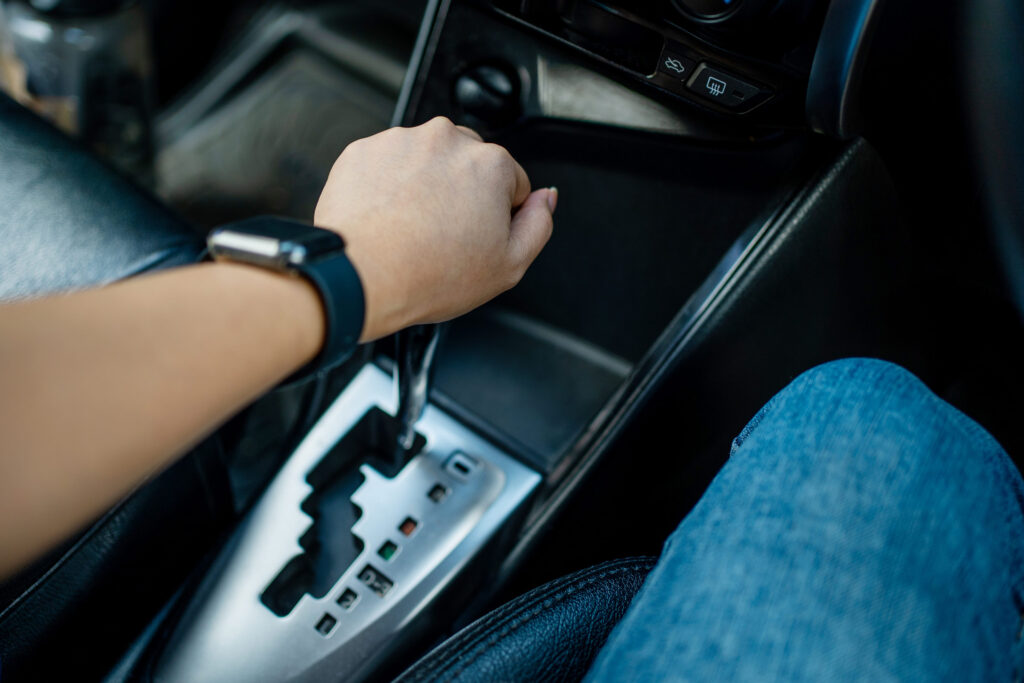
Close-up of hand changing automatic gear while driving

Automatic Transmission Slipping or Jerking? What It Means and What a Fix Costs

You put your foot down and the revs climb, but the car doesn’t pull. Or it thumps into gear from a standstill hard enough to make you wince. One driver described it to us as “my car stopped accelerating when I went past 2000 RPM” — the revs keep climbing, the speed doesn’t follow, and the gearbox feels like it’s thinking about it. That is an automatic transmission slipping. Slipping and jerking are symptoms, not a verdict. Some causes cost a few hundred rand to sort out. Others mean the gearbox has to come out of the car. The only honest way to know which one you’re dealing with is a diagnosis, and that diagnosis costs far less than guessing wrong and driving on a damaged box for another month. We rebuild and recondition automatic transmissions at our workshop in Okavango Park, Brackenfell, so we see this every week. Here’s what’s actually happening inside the gearbox, and what you’re realistically looking at paying. What slipping, flaring and jerking actually feel like The words get used loosely. They describe different faults, and they point at different parts inside the box. Slipping is when the engine revs rise but the road speed doesn’t keep up. You notice it under load — pulling away uphill, joining the N1, or towing. The engine sounds like it’s working, but the car isn’t moving any faster. Flaring is the same thing at a gear change. Instead of the revs dropping when it shifts up, they spike briefly before the next gear grabs. It’s most obvious between second and third. Jerking is a mechanical thump or shudder. You feel it when it engages drive from a standstill, or when it shifts down under braking. Sometimes it feels like the whole car lurches. On a dual-clutch box, low-speed judder is the classic complaint. Delayed engagement is different again. You select drive, and nothing happens for two or three seconds. Same when you select reverse. That delay usually points at fluid pressure, not at worn internals. Why automatic gearboxes slip and jerk An automatic gearbox works on hydraulic pressure. Fluid pressure pushes on clutch packs and bands to hold each gear ratio. When pressure drops, or when the friction surfaces wear, the gear can’t hold and it slips. That’s the whole mechanism in one sentence. In practice, the pressure drops for one of a handful of reasons. Low or burnt fluid. The most common cause by a mile. Fluid leaks out slowly through a worn seal or a cracked pan gasket, and the level drops until pressure falls with it. Fluid that’s gone dark and smells burnt has been overheated, and overheating glazes the clutch plates. Topping it up treats the symptom. You still need to find the leak and work out what cooked the fluid. Wrong fluid. Modern automatics are fussy. Each box is designed around a specific fluid spec. If someone put the wrong spec in at a service, shift quality goes off gradually and the clutch packs wear faster. We see this on imported vehicles where the correct fluid was hard to find locally. A clogged filter or blocked valve body passage. There’s a filter in the sump, and a maze of tiny channels in the valve body that route fluid. Varnish and debris block those channels. Pressure drops in the circuit that runs one particular gear, and that gear starts slipping while the rest feel fine. A sticking or failed solenoid. Solenoids are electric valves that tell the gearbox when to shift. When one sticks, you get a harsh shift, a flare, or a gear that refuses to engage. A solenoid fault often triggers limp mode, and the car locks itself into one gear to protect the internals. Worn clutch packs and seals. Internally, an automatic is a stack of clutch packs, steel plates, seals and bearings. Every pack has a friction surface that wears down over its life. Once the material is gone, no fluid change will bring it back. This is the point where the box comes out and gets rebuilt. Torque converter failure. The converter is the fluid coupling between engine and gearbox. When its internal lock-up clutch fails, you get a shudder at low speed and a slip that gets worse as the box heats up. A failing converter also sheds debris into the fluid, which then damages everything downstream. Mechatronic unit faults. On modern dual-clutch and certain automatic boxes, the mechatronic unit combines the hydraulic control body with the electronic control module. It’s the brain and the muscles in one housing. Seal failure inside the unit causes pressure loss, and you get jerking, hesitation and juddering at low speed. We repair and refurbish these units rather than automatically replacing them. What a proper diagnosis involves You can’t diagnose an automatic gearbox by test driving it around the block. Anyone who quotes you a price over the phone without scanning the car is guessing, and you’ll wear the cost of that guess. A proper diagnosis starts with a fault-code scan of the transmission control module. Then we read live data — pressures, temperatures, solenoid duty cycles, and the adaption values the box has learned over time. Those adaption values are revealing. A box that has been slipping for months will have shifted its own settings to compensate, and you can see it in the numbers. Then we check the fluid condition and level on the specific procedure for that gearbox, because many modern boxes have no dipstick and have to be checked at a set temperature with the engine running. After that, a road test with the scan tool connected while we drive, so the faults show up in real data rather than as a description. Often we also drop the sump and look at the pan magnet. Fine metallic paste is normal wear. Chunks, bright metal flakes or clutch material in the pan tell you the inside of the box is already damaged. The full scope of what we

Automatic Transmission Slipping or Jerking? What It Means and What a Fix Costs Read More »