
A passenger car with a noisy gearbox can wait until next month. A truck cannot. Every day it sits in the yard is a day of deliveries not made, sites not serviced, and a driver still on the payroll. That’s why commercial vehicle transmission work is a different job to a car gearbox, and why it gets quoted and scheduled differently.
We repair commercial transmissions at our workshop in Okavango Park, Brackenfell, and the conversations are always the same. The owner wants to know two things. How much, and how many days. Here’s a straight answer to both, and what you can do to keep the number and the days down.
Why commercial gearboxes fail differently from car gearboxes
A truck gearbox does the same basic work as a car gearbox, under completely different conditions. That changes which parts fail and how quickly.
Load is constant. A light commercial vehicle spends most of its life loaded to or near its rated capacity. A car gearbox sees that kind of load occasionally, on a steep hill or with a full boot. A truck sees it every shift, all day. Gears and bearings that would last the life of a car reach their wear limits far sooner.
Torque is much higher. Commercial transmissions handle multiple times the torque of a passenger gearbox. Every tooth engagement, every countershaft bearing and every synchroniser takes a heavier beating. When something is marginal in the design, a loaded truck finds it.
Heat builds and stays. A loaded truck works the gearbox hard for hours at a stretch. Transmission oil that stays hot for long periods oxidises, thins, and stops protecting the bearings. On commercial vehicles, the oil change interval is not a suggestion.
The duty cycle is punishing. Delivery routes mean hundreds of clutch engagements and gear changes a day. Refuse and construction work means low-speed, high-load, constant direction changes. That’s the hardest duty cycle a manual gearbox can face.
Mileage is high and clocked fast. A fleet vehicle can cover in three years what a private car covers in fifteen. Wear that you would expect at 300,000 km arrives in year four.
The symptoms fleet owners report
Commercial gearbox faults announce themselves before they strand the vehicle. Catch them at this stage and the repair is smaller.
A whine or rumble that changes with road speed but not with which gear you’re in usually points at bearings in the gearbox or the differential. A whine that’s present in one gear and quiet in the next points inside the gearbox itself.
Difficulty selecting a gear, or a gear that grinds when you engage it, points at worn synchronisers or a clutch that isn’t releasing fully. Both get worse, and the second one takes the gearbox with it if you keep forcing it.
Jumping out of gear under load is a serious warning. It usually means worn selector forks, worn gear teeth or excessive shaft end float. It doesn’t fix itself, and it becomes a safety problem on a loaded vehicle.
A burning smell or a clutch pedal that engages very high suggests the clutch is on its way out. On a truck, a slipping clutch also overheats the flywheel and the release bearing, which turns a clutch job into a clutch and flywheel job.
Oil leaking from the bell housing or the rear seal points at a failed input or output shaft seal. Left alone, the oil level drops and the bearings run dry.
Vibration through the cab or the gear lever at a specific speed often comes from the propshaft rather than the gearbox. Universal joints, centre bearings and balance weights all fail with age and load.
Downtime is the real cost
Fleet managers usually know the parts and labour number. The number that hurts is the days. Here’s how the common jobs compare on turnaround.
| Job | Typical vehicle | Workshop turnaround | Typical cost range |
|---|---|---|---|
| Propshaft repair and balancing | Light commercial, bakkie | Same day to 2 days | R3,500 – R12,000 |
| Clutch replacement | Light commercial, bakkie | 1 – 2 days | R8,000 – R20,000 |
| Differential rebuild | Light to medium commercial | 2 – 5 days | R12,000 – R40,000 |
| Manual gearbox rebuild | Bakkie, panel van, delivery vehicle | 3 – 7 days | R15,000 – R45,000 |
| Heavy truck gearbox rebuild | Heavy commercial, truck tractor | 1 – 3 weeks | R45,000 – R150,000 and up |
Those ranges move with the make, the parts availability and how much damage was done before the vehicle came in. A heavy truck unit with parts out of Europe takes longer than a common local box, and that delay sits in the availability line rather than the labour.
Put a daily figure on your own downtime and the table reads differently. A truck earning R6,000 a day that sits for a week has cost R42,000 before the workshop invoice arrives. That’s usually more than the repair itself, and it’s the argument for fixing early rather than running a failing gearbox until it stops.
How to keep downtime to a minimum
Book the inspection before the failure. A gearbox with a developing bearing whine can be scheduled into a quiet week. A gearbox that has seized gets recovered, and then it waits its turn in the queue like everything else.
Tell us the symptoms in detail. Which gear, which load, which speed, hot or cold, and whether it’s worse going uphill. That narrows the diagnosis before the vehicle arrives, and it means we order the right parts on day one instead of day three.
Give the vehicle’s history. Service intervals, last oil change, previous repairs, and whether the box has been opened before. A gearbox that’s been worked on elsewhere often has a surprise inside, and it’s better to know that upfront.
Consider a service exchange or rebuild rather than trying to source a used unit. Chasing a used gearbox for a specific truck model can take longer than rebuilding the one you have, and it lands you with an unknown unit at the end of it. On commercial boxes, where parts supply is often better than used stock, a rebuild is usually the faster route to a working vehicle.
What we actually do with commercial transmissions
Commercial transmission work at our workshop covers the full drivetrain, because on a working vehicle these parts fail together and are diagnosed together.
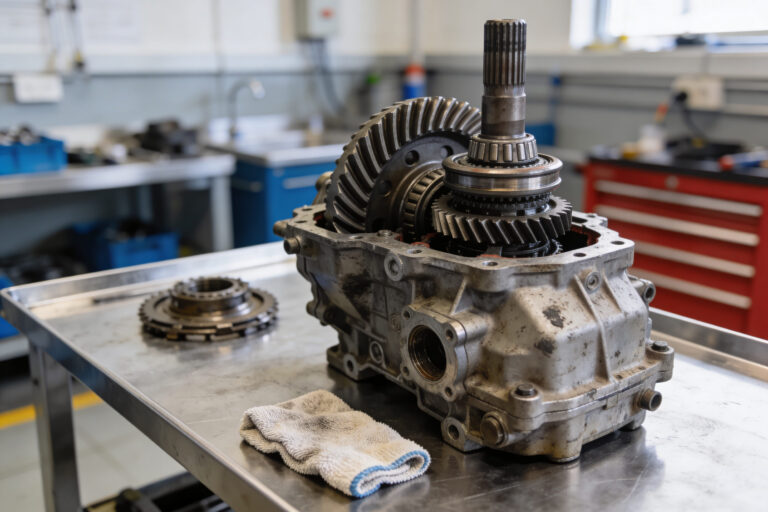
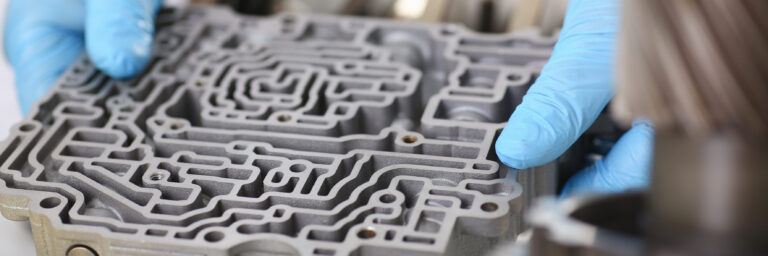
Gearbox repair and reconditioning on manual commercial boxes, including strip-down, measurement, bearing and synchroniser replacement, and reassembly to specification. Automatic commercial transmissions get the same treatment as a passenger unit, with valve body work, converter reconditioning and mechatronic repair where the vehicle uses one.
Clutch replacement, including flywheel inspection and machining where it’s needed, and release bearing and fork replacement as standard while the box is out.
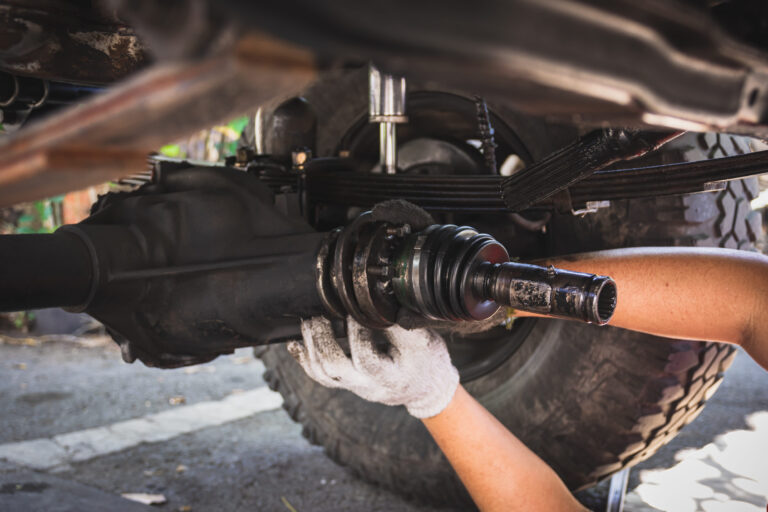
Differential diagnosis, repair and reconditioning, including crown wheel and pinion setup, bearing replacement, and backlash adjustment. Propshaft and CV joint repair, including universal joint replacement and balancing.
And diagnostics before all of it, because on a modern commercial vehicle, the fault codes and live data tell you whether you’re looking at a gearbox problem, a drivetrain problem, or an electronic one. Guessing on a truck is expensive.
The full list of what we handle sits on our transmission and drivetrain services page. If your trucks are based around the northern suburbs, the N1 corridor or the Winelands, getting the vehicle to Brackenfell is straightforward.
Automatic versus manual on a commercial vehicle
The commercial market is moving towards automatics, and workshops have had to move with it. An automatic commercial gearbox offers real advantages on delivery and refuse routes where the driver changes gear hundreds of times a day. Fewer clutch replacements, less driver fatigue, and smoother torque delivery under load.
The trade-off is that automatic commercial boxes are electronically controlled and hydraulically complex. When they fail, the diagnosis matters more, and the repair bill is higher. Manual boxes remain simpler and cheaper to rebuild, and on long-haul work they still hold their own.
Either way, the maintenance principle is the same. Fluid and filters on schedule, correct spec fluid, and acting on the first unusual noise rather than the second.
Frequently asked questions
How long is a truck gearbox rebuild going to take?
A light commercial manual box is commonly back on the road in three to seven days. A heavy truck unit typically runs one to three weeks, and parts availability is usually the deciding factor rather than the labour. We confirm the expected turnaround after the strip-down inspection, when we know exactly what’s needed.
Can you repair a commercial gearbox without removing it from the truck?
Some faults, yes. Clutch actuation issues, external leaks, sensors, wiring and propshaft work are all handled with the gearbox in place. Internal faults, worn bearings, synchronisers or gear teeth need the box out, because the unit has to be stripped and measured on a bench.
Is it worth rebuilding a gearbox on a high-mileage truck?
Usually, if the rest of the vehicle is sound. A rebuild restores the gearbox to known condition for a fraction of the price of a replacement truck, and you keep the matching unit and calibration. It stops being the right call when the chassis, engine or body are also near the end of their life.
What causes a truck gearbox to fail early?
The usual culprits are skipped oil changes, the wrong oil spec, overloading beyond the rated capacity, and continuing to drive on a developing fault. A bearing whine that gets investigated early costs far less than the same whine that turns into a seized shaft and a casing full of debris.
Written by the team at HM Transmissions, a specialist transmission and drivetrain workshop at 33 Patrys Crescent, Okavango Park, Brackenfell, Cape Town. We repair and recondition commercial vehicle transmissions, automatic and manual gearboxes, differentials, propshafts and CV joints for private owners and fleets across the Cape Peninsula.